Using Qualitative Life Course Perspectives to Understand the Lived Experience of Structural Racism in Older Black Adults and its Influence on Goal-Concordant End-Of-Life Care

Elizabeth Dzeng, MD, PhD, MPH
University of California, San Francisco
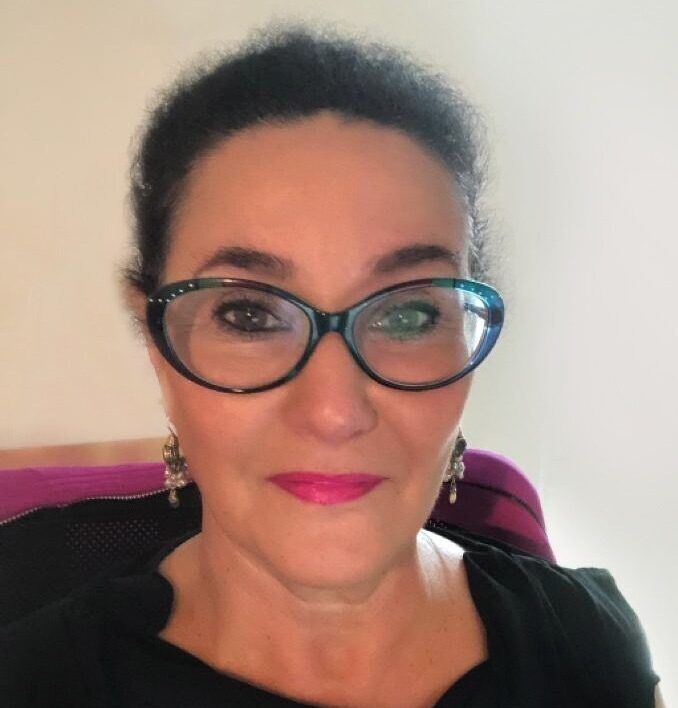
Ronit Elk, PhD
The University of Alabama at Birmingham
Project Description:
Black Americans are less likely to receive goal-concordant end-of-life (EOL) care in part due to racial disparities such as poorer EOL care communication, inadequate pain treatment, and reduced palliative care access. One root cause of racial disparities in health is structural racism, which are policies and practices that perpetuate racism and racial disparities. Interventions must go beyond changing individual attitudes and biases to dismantling racist policies and institutions. This project employs life course perspective using traditions drawn from oral histories, is thus an ideal perspective from which to examine structural racism and its influence on goal-concordant EOL care. Their lived experiences of structural racism likely influences their healthcare interactions, perceptions, and decisions around EOL care.
The objective
of this study is to gain insight into how structural racism throughout the life course of older Black adults at two sites in the United States influences the receipt of goal-concordant EOL care. We will partner with members of the Black community at two sites in the US (University of California, San Francisco and University of Alabama, Birmingham) using qualitative life course methods and community based participatory research (CBPR) methods. We will establish a Community Advisory Board (CAB) and elicit their perspectives to guide the overall project including co-developing study instruments and materials, reviewing study data, and guiding the interpretation of results. We will conduct in-depth oral history interviews with older Black adults with serious illness and recently bereaved family members to understand their life course experiences around individual and structural racism.
Importance of Cross-Disciplinary Research to the Project:
As a physician-sociologist-ethicist working in geriatric palliative care, my research naturally transcends disciplinary boundaries. This project is an exciting opportunity to move into community based participatory research (CBPR), for which I’ve partnered with Dr. Ronit Elk, at UAB, who is an expert in CBPR methods in palliative care. As the PI of this project, I will be conducting the study at both sites, with the mentorship and advice from Dr. Elk, who will mentor me around CBPR methods and facilitate and introduce me to her networks in Birmingham. I am grateful for her expertise and connections to help make this project possible.
Project Origin:
My current research program, funded by the California Department of Public Health (CDPH) extends upon that research to focus on systems-level factors that contribute to non-beneficial high-intensity life-sustaining treatments near the EOL in older adults with advanced dementia using qualitative sociological methods. During my years on faculty, I have felt a growing disquiet about not having a direct research link to health equity and sought ways to unite my research in EOL care with my passion for social justice. In my CDPH project, I felt that a missing piece was the patient and community voice, and in particular, the inequities in the delivery of goal-concordant EOL care. I concluded it was impossible to understand why goal-discordant EOL care occurred without a broader understanding of the structural constraints that privileged some groups over others.
As a physician-sociologist studying how institutional structures and cultures influence clinical practice patterns in EOL care, I was particularly drawn to transferring the knowledge and methods used in my CDPH project towards a focus on equity in EOL care. Understanding structural racism was the key to understanding why racial disparities have persisted for so long despite so many efforts to mitigate them. I began exploring these issues in the context of dementia palliative care through the Atlantic Fellowship for Equity in Brain Health, through leadership opportunities in my professional home, the Society of General Internal Medicine (SGIM) and at UCSF. The RCCN has provided me with critical funding for this project that has allowed me to pivot my research focus into this important area
Potential Impact:
Structural racism exists in healthcare and in geriatrics and palliative care, and yet there have been very few studies that have rigorously examined structural racism or racism as a root cause of healthcare disparities broadly and at the end of life. In addition, academic research has not traditionally included voices of the community. This project brings methods around CBPR to palliative care, with the potential to demonstrate how community voices can partner with academia to understand how racial disparities are manifested and solutions to combatting them as equal partners. Finally, this project seeks to use a novel perspective using qualitative life course methods to understand how structural racism across the life course influences end of life care.
Next Steps:
The goal of this pilot project is to develop the Community Advisory Board, who will be integral to this and future projects. They will advise on this current project, as well as potential next steps both from a research as well as community impact perspective. By partnering with the community, this project has the potential to more authentically reflect the perspectives, preferences, and goals of community members. We also hope that this project will help change the culture at our academic institutions around both structural racism and the use of community partners as equals in clinical research.
This study will ensure that future interventions developed will be based upon the lived experiences of structural racism of older Black adults. We will use the data from this project to design, pilot, and implement interventions for future R-level applications to mitigate the impact of structural racism on EOL care. For example, if a lack of healthcare continuity throughout the lifespan engenders mistrust, then we could develop longitudinal hospital programs that integrate community guides who develop relationships with older Black patients before they encounter serious illness
The importance/value of RCCN funding for this collaborative research:
This project represents a pivotal career transition into research around understanding and developing solutions to address structural racism around end of life care in older Black adults. As such, I’m so grateful to the RCCN for funding my first ever grant in this area, which has enabled me to continue moving towards this area and to learn how to conduct community based research using life course methods in structural racism in palliative care. Furthermore, the opportunity to collaborate with the Deep South RCMAR and UAB is an invaluable opportunity to learn from experts in the field, to broaden my networks in this area, and to bring this project to the Deep South.